

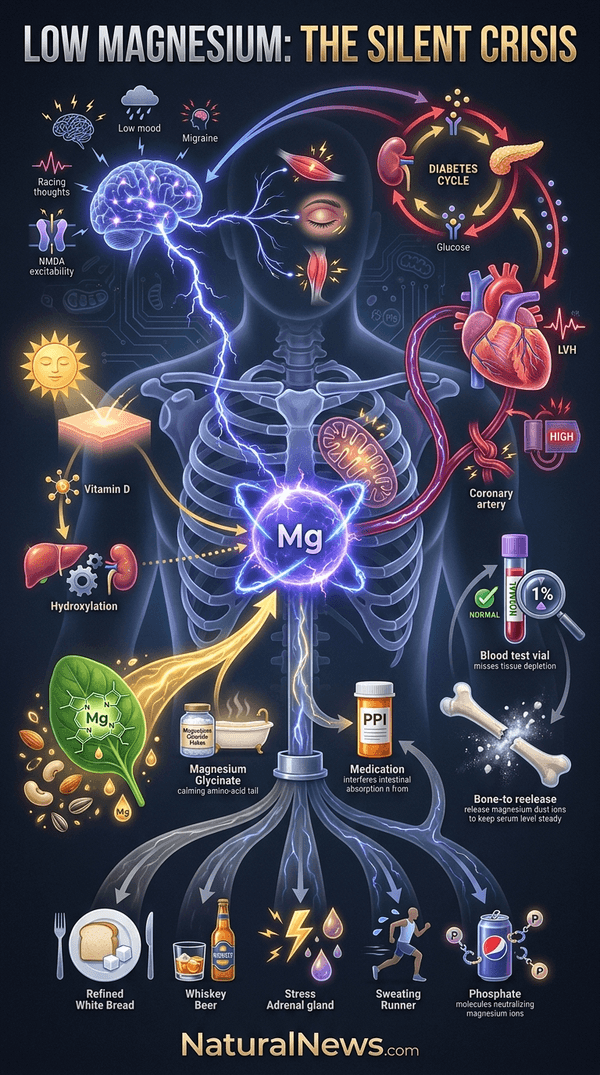
Magnesium is the fourth most abundant element in the human body and one of the seven essential minerals, according to an article on Mercola.com [1]. It is necessary for the healthy functioning of most cells, particularly the heart, kidneys, and muscles; low levels impede cellular metabolic function and deteriorate mitochondrial function, the article stated [1].
The mineral is required for the activation of vitamin D, so deficiency may hamper the body’s ability to convert vitamin D from sun exposure or oral supplementation, according to a separate Mercola.com article [2]. Magnesium is involved in at least 300 chemical reactions because it works as an electrolyte, a mineral that carries an electric charge when dissolved in body fluids, according to an article on NaturalNews.com [3]. It supports sleep, energy production, muscle recovery and stress management, according to a separate NaturalNews.com report [4].
Read Full Article: https://www.naturalnews.com/2026-08-03-low-magnesium-symptoms-risks-and-treatment-options.html
