

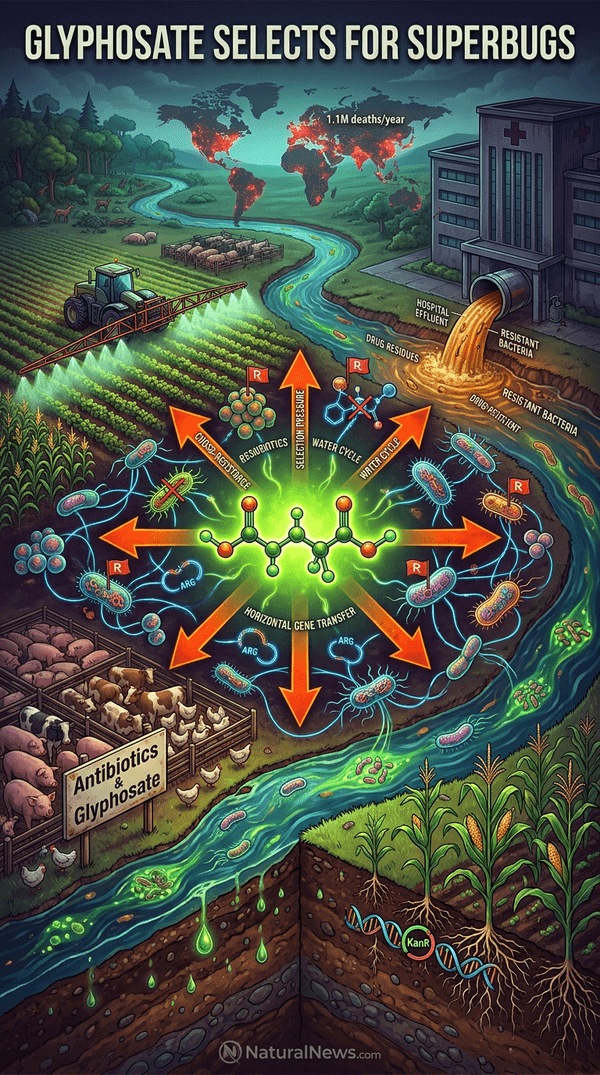
A study published June 23 in Frontiers in Microbiology found that multidrug-resistant bacteria from hospitals also show high resistance to glyphosate, a widely used herbicide, according to researchers at the Institute of Medical Microbiology and Parasitology in Buenos Aires. The analysis included 68 bacterial strains from a protected nature reserve in Argentina, 19 from local hospitals, and 15 from agricultural sites, the report stated. The findings suggest that agricultural use of glyphosate may contribute to the spread of antibiotic resistance beyond healthcare settings, the researchers said.
Antimicrobial resistance (AMR) contributes to an estimated 1.1 million to 1.4 million deaths worldwide each year, according to public health data. [1] This growing threat has been primarily linked to overuse of antibiotics, but the new research indicates that weedkillers may play a role. Dr. Daniela Centrón, senior author of the study, stated that “these results suggest that weedkillers — which, unlike antibiotics, are widely applied in agricultural environments — may have the unintended side-effect of selecting for AMR among bacterial communities within the soil.”
Read Full Article: https://www.naturalnews.com/2026-06-24-study-links-glyphosate-selection-antibiotic-resistant-superbugs.html
