

Yair Netanyahu and the Haredi Rise in Israel’s Zionist Institutions
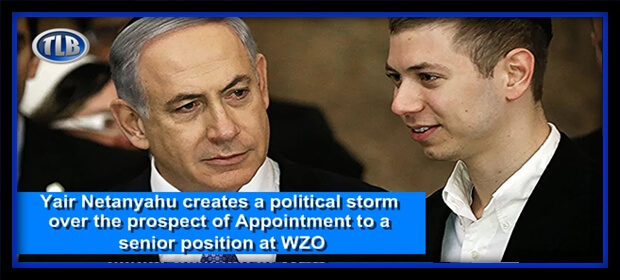
What began as a brief political scandal around the possible appointment of Yair Netanyahu, Israel’s prime minister’s son, quickly opened a window onto a much larger and largely hidden arena: Israel’s national Zionist institutions. The proposed role at the World Zionist Organisation was no ceremonial post; it came with a minister-level salary, generous benefits, and real influence over budgets and appointments. News of the potential appointment sparked a public and political backlash, with accusations of nepotism and cronyism forcing the move to be shelved. Yet the controversy exposed something deeper. ~Introduction via Global Affairs
**********
Have the Haredim Embraced Zionism? “They Haven’t Suddenly Become Zionists – They’re Here for the Money and the Jobs”
By Shuki Sadeh
The controversy over the proposed appointment of Yair Netanyahu to a senior role in the World Zionist Organization has sparked a rare wave of public interest in the internal politics of Israel’s national institutions. One long-term trend that has largely escaped attention is the increasing presence of ultra-Orthodox parties in national institutions, where they now constitute 17 percent of the delegates to the Zionist Congress. Are the ultra-Orthodox becoming Zionists? Are they forging new connections with non-Haredi streams of Judaism? And what about the clause promoting IDF service?
A Shomrim report
A little over a month ago, a political storm erupted over the prospect that Yair Netanyahu could be appointed to a senior position in the World Zionist Organization, accompanied by a salary equivalent to that of a government minister and other perks. The proposal focused attention on Israel’s national institutions, which tend to conduct their affairs far from the prying eye of the public or the media. In the end, the prime minister’s son was not given the position. Apart from the questionable identity of the candidate, there was nothing new in such conduct – whereby parties from all parts of the Israeli political spectrum (apart from the Arab parties) divvy up between them plum jobs with generous salaries and other perks. In late November, a new agreement was signed, with 35 senior positions up for grabs – of which 10 come with a salary equivalent to that of a minister. In this respect, the status quo has been restored, and all parties – with the exception of Yesh Atid, whose leader, Yair Lapid, opted to withdraw from national institutions – are participating. “Efforts to arrange a job for Yair Netanyahu, for members of the Deri family and for a huge group of political activists are just the tip of the iceberg of what’s going on there,” Lapid said, referring to the agreement and the allocation of positions in national institutions among political parties.
It is no coincidence that Lapid mentioned the Deri family. If there is one relatively new trend within these national institutions, which is not being subjected to much public scrutiny, it is the increased involvement of ultra-Orthodox parties in the institutions in recent years. Shas was the first of these parties to take the plunge and began taking active part in them back in 2015. Since then, it has increased its involvement. One of Aryeh Deri’s sons, Yanki, is the head of a department in the World Zionist Organization. Shlomo Deri, the brother of the Shas chairman, served until 2021 as deputy chairman of the Jewish National Fund and then served for another year as associate chairman. While neither of these positions pays a salary, they both wield massive influence in terms of real estate, the profession in which Shlomo Deri was active. Currently, he is believed to be on the verge of being reappointed to the associate chairman position he held until three years ago.
Read Full Article: https://www.thelibertybeacon.com/yair-netanyahu-and-the-haredi-rise-in-israels-zionist-institutions/
